AN INITIATIVE TO HELP THE STUDENTS ONLINE.

Showing posts with label IFTTT. Show all posts

Tuesday, 12 October 2021

New top story from Time: There’s No Definitive List of Roman Empresses. Their Individual Stories Still Matter


A line-up of busts or paintings of the first twelve Roman emperors is one of the commonest decorations in up-market houses in Europe and the United States. Most are not actually ancient Roman, but modern versions created over the last few hundred years, attempting to capture the distinctive “look” of these famous, or infamous, dynasts, from Julius Caesar (assassinated 44 BCE) to Domitian (assassinated 96 CE). They are so familiar that most of us walk straight past them in museums and galleries, without a second look.

Not so with their wives. In the modern world we have been used to spotting female power-wielders or villains, as the power behind throne—whether Nancy Reagan whispering in Ronald’s ear, or Ivanka Trump in the ear of her father. But what of ancient Rome and Roman versions of female imperial power? What do we think of Roman “empresses”? Is there a model for power among the women of the Roman hierarchy? Many of us thrilled to the wicked Livia (wife of the emperor Augustus) in the BBC/HBO’s I, Claudius. But where are the women in our view of Roman power?
[time-brightcove not-tgx=”true”]

It has proved next to impossible for modern artists (or ancient ones for that matter) ever to create a convincing lineup of Twelve “Empresses” to match the Twelve Caesars. It is true that a number of female relatives sit alongside the ancient busts of emperors in the Room of the Emperors in the Capitoline Museums in Rome, and in the overall design of the 16th century “Camerino dei Cesari” at Mantua (decorated by Titian and Giulio Romano) some of the dynastic gaps between the generations were filled with small roundels of the emperors’ wives and mothers. But there is no Suetonius—the second century biographer who wrote the lives of the Twelve Caesars—to define anything like an orthodox set of imperial women. Even if you restrict the focus to the wives only, there are many more empresses than emperors (almost every emperor married several times); and, apart from changing fashions in hairstyles, there is no ancient “look” to distinguish one from another. The familiar modern groups of the Twelve Caesars, whatever their fuzzy edges, substitutions and misidentifications, are usually exactly that: Caesars only.

Read more: Mary Beard on SPQR, Ancient Rome and the Migrant Crisis

Occasionally an adventurous modern artist did attempt a series of empresses to parallel the men, whether out of a sense of symmetry, completeness or maybe a desire to introduce an erotic touch to the otherwise austere imperial landscape. But it was less easy than it must have seemed. The problems become clear in the most famous and influential such series to have survived, from the hand of the engraver Aegidius Sadeler in the early 17th century. For Sadeler had already created a hugely successful series of twelve emperors, mostly copied from Titian’s paintings in the Camerino dei Cesari, But he did not stop there. He also produced twelve matching imperial women to make a complete set of 24, in couples.

Sadeler’s source of inspiration for this has long been a puzzle. There is no original artist named on the prints of the women (unlike the acknowledgement to Titian on those of the men). So did Sadeler devise them himself, in order to get both sexes in? Or, if he copied them, where were, or are, the originals? There have been all kinds of suggestions. But finds in the archives at Mantua and elsewhere make it now virtually certain that these figures ultimately go back to a set of imperatrici (empresses) painted in the 1580s by a local artist, Theodore Ghisi, to complement Titian’s Caesars—and installed in their own room, the “Camera delle Imperatrici,” somewhere in the palace. How this was laid out, even where exactly it was, and what happened to the paintings is largely a matter of guesswork. All we now know of them comes from Sadeler’s prints.

Get your history fix in one place: sign up for the weekly TIME History newsletter

In some ways, they were a close match with the emperors. The women were shown as the same distinctive three-quarter-length figures. They were also replicated, in several series of frankly undistinguished oil paintings that have turned up all over Europe, and more appealingly in other media too. Their faces were included among the tiny enamels on an elaborate binding in a copy of Suetonius’s Twelve Caesars; and the image of Sadeler’s Augustus on one teacup in the British royal collection was matched by his Livia in the center of the saucer (modestly concealed, or firmly obliterated, when the cup was in its place). But there were some telling differences too.

The emperors are distinctive individuals. Not the empresses. All but one of these imperial women in their flouncy frocks look more or less identical; it would be very hard to tell, say, Petronia (wife of Vitellius), from Martia Fulvia (wife of Titus), just on appearance. The fact that there was usually more than one wife to choose from and other marital complications (to put it euphemistically) only added to the problems. These complications lie behind the one and only distinctive character in the lineup. For the emperor Otho had had just one wife, early in his life, Poppaea, who later married the emperor Nero. Presumably in order to avoid the difficulties that this might cause in his set, the artist chose to omit Poppaea altogether, to depict a later wife of Nero (a different, but related, Messalina), and in the case of Otho to substitute his mother for a wife. Her standout appearance is simply down to the fact that she is represented as much older than the others.

It is almost as if the project to construct a series of twelve “empresses” ended up exposing the fact that it was impossible to do so on the same terms as the men. It foundered on the routine similarity between them, on simple confusions about who was who, and on the lack of any distinctive ancient “look,” for the later artists to discover, follow or adapt. There was, however, another side to it. Western artists may have found it next to impossible to recreate a systematic authentic lineup of the Twelve Caesars in female form. But beyond the gaps, uncertainties and identikits (and perhaps partly liberated by them), as far back as the Middle Ages, they enjoyed re-imagining the colorful tales found in Roman writers of these women’s power and powerlessness, as individuals; they used and embellished ancient anecdotes, satire and gossip about particular villains and heroines to expose the corruption of empire and the tragedies of its innocent victims. They have produced some brilliant, if chilling, re-creations of the dynamics of Roman autocracy, through a female lens, although with more than the occasional hint of misogyny. Their empresses appear in different guises, from sexual predators to blameless paragons.

Read more: Rome Didn’t Fall When You Think It Did. Here’s Why That Fabricated History Still Matters Today

Painters have repeatedly returned to the figure of Nero’s mother Agrippina, reputed to have been her son’s lover and eventually murdered by him. A particularly nasty series of medieval images shows Nero, wine glass in hand, presiding over the dissection of his mother’s corpse (looking for her womb, it was said, and the source of dynastic power); others show the emperor just gazing, lasciviously, at her body. Another favorite has always been Messalina, Agrippina’s predecessor as the wife of the emperor Claudius: memorably shown by Aubrey Beardsley striding out from the palace for a night out (the story was she challenged the prostitutes of Rome to a contest to discover who could have sex with the most men), and equally memorably killed by a hit-squad sent by Claudius. Popular too, but as a symbol of virtue, was Agrippina’s mother, also called Agrippina (but of a very different character), who forever cherished the memory of her husband Germanicus, supposedly poisoned on the orders of his uncle, the emperor Tiberius; she became a symbol simultaneously of wifely loyalty, and the domestic cruelty of the imperial court.

Some of the tales lying behind these images may now be as unrecognized by most of us as the more arcane byways of the Old Testament (and they may never have been part of people’s ordinary everyday repertoire). But it takes only a little decoding to see how artists were using, and cleverly adapting, them to offer sharp reflections on the role of women in the hierarchy of power. Artists might have been defeated by the line-up of the twelve, but they did use individual empresses to open a window onto the corruption at the very heart of the empire.

Adapted from TWELVE CAESARS: Images of Power from the Ancient World to the Modern by Mary Beard. Copyright © 2021 by Board of Trustees, National Gallery of Art, Washington. Reprinted by permission of Princeton University Press

Share:

New top story from Time: John le Carré’s Silverview Is Not the Defining Final Chapter of a Literary Career


When John le Carré died last December, his obituarists struck a common theme: here was a master spy novelist who, despite selling millions of books and having his work adapted for television and film, never received the recognition he deserved as a literary giant.

Over six decades, le Carré drew upon his brief career in British intelligence to chronicle the decline of the U.K. as a global power and critique what he saw as an arrogant and corrupt Western neo-imperialism, typically through the perspective of those in the “secret world” of spying. His archetypal heroes were not James Bonds or Jack Reachers but often disillusioned men driven by moral values they are not certain they still believe in. What compels people to serve their country, or betray it, was a consistent theme in his work.
[time-brightcove not-tgx=”true”]

But just as Graham Greene—another former spy turned novelist—divided his work into “entertainments” and serious fare, so can one separate le Carré’s output (a formidable 26 novels over 60 years) into weightier and lighter groups. Into the former you might put the Karla trilogy of Tinker Tailor Soldier Spy, The Honourable Schoolboy and Smiley’s People, or the semi-autobiographical A Perfect Spy; into the latter you could place one-off bagatelles like Absolute Friends or The Mission Song.

Read More: John le Carré: A Most Elusive Man

Le Carré’s final published novel, Silverview, out Oct. 12 in the U.S., also fits into the latter group. Barely 200 pages long, the book weaves together the stories of Julian, who has left a high-paid job in the City of London to become a bookseller, Edward, an enigmatic Polish wheeler-dealer he befriends, and Proctor, a British intelligence official hunting down the source of a leak. Left behind when le Carré died, the book was shepherded to publication by his son Nick Cornwell, who says in an afterword that the process was more like retouching a painting than completing a novel.

For the reader, Silverview more resembles a jigsaw puzzle. Le Carré was always a superb plotter, and here he deftly arranges a mosaic of seemingly unrelated events and conversations that cohere into a full picture only as the book comes to an end. The narrative rewards yet demands close attention; unless you happen to note the make of a car driven by a mysterious unnamed woman introduced fairly early on, for example, events toward the book’s end might prompt some head-scratching.

Yet frustratingly, Silverview also feels unfinished—not in its narrative, but in the bits in between major plot points. Le Carré’s keen observational style and grasp of psychological depth seems muted here. Characters and locations feel only sketched out; the central character of Julian, the bookseller, is especially thinly drawn. The motive for the act of betrayal at the book’s center is never explained by the character responsible for it and only guessed at by others. Once you’ve completed the puzzle, it somehow feels as if some pieces are still missing.

The real mystery of Silverview is why le Carré never published it during his lifetime. In his afterword, Cornwell says his father began writing the book around 2013 yet the manuscript was “never signed off.” His theory is that Silverview’s portrayal of the secret service as fragmented and directionless hit too close to home for his father’s comfort, especially as a former employee himself. But le Carré’s portrayal of the secret services has never been flattering—from the clubby, greying “Circus” of his Cold War-era novels to more recent portrayals of a divided, corrupt establishment more concerned about impressing the “cousins” in America than upholding national values.

Did he suspect, then, that the novel was bad? Again, it seems unlikely—Silverview is a perfectly serviceable thriller, even if it is comparatively unambitious. Perhaps le Carré recognized that he was reaching into an overly familiar bag of tricks. Proctor, the aging spymaster looking long into the past to investigate a turncoat, has a similar task to that of George Smiley in prior novels (like Smiley, he even has an offstage wife whose fidelity he questions). And Julian is the latest in le Carré’s long line of civilian naïfs drawn into the shadowy world of intelligence, from The Little Drummer Girl to The Russia House to Our Kind of Traitor.

Silverview, then, is more a drinkable blended whiskey than the vintage single malt le Carré completists might have been hoping for. But readers needn’t look far for a better capstone to his body of work when they can pick up A Legacy of Spies, the 2017 book that concludes the Smiley saga with understated elegance, and draws a throughline from the curdled patriotism of Britain in the Cold War era to the crude nationalism of today. Not only is it a compelling read, but it is also the strongest argument for le Carré as the literary lion that he undeniably was.

Share:

New top story from Time: The Seven Secrets of Indra Nooyi’s Success


Indra Nooyi struggles to be heard over the sounds of outdoor dining, midtown traffic, and a fountain gushing down the wall. That’s clearly rare for the former PepsiCo CEO—so she beckons the restaurant’s owner and asks if he can shut off the water.

He obliges, and Nooyi proceeds to regale us, a table of female journalists at the helm of various New York media, with anecdotes from her just-released book, My Life in Full: Work, Family, and Our Future.

The whole lunchtime interaction—assess problem, determine what’s in your control, improve outcome, go forth with grace—is signature Nooyi. Her book delves even further into this exacting style punctured by compassion, loyalty, and deep relationships that get results.
[time-brightcove not-tgx=”true”]

I confess to having studied Nooyi for a long time now. I’ve watched her interviews, live and on YouTube, during my own career trajectory. A manager training I once attended spent hours dissecting Nooyi’s ability to peer around corners and lead a company through change. Then there’s the South Asian connection: a member of our own community ascended to a Fortune 50 company who proudly credits her childhood in Chennai and the role of extended family in making it all possible. For years, my people proudly (and wrongly) asserted that the 65-year-old executive wears a sari in the boardroom.

Thankfully, her book debunks the myth: After feeling like a misfit in oversized polyester outfits, she chose the traditional Indian dress for an internship interview, landed the job, and donned the sari for the rest of the summer. Eventually, she transitioned to Western attire, and her sartorial choices gained style and confidence as her career progressed.

Read more: A Woman of Color Cannot Save Your Workplace Culture

Back stories like that are the hallmark of this part memoir, part clarion. We’ve heard a lot from Nooyi over the last two decades, talks distilled into tweetable headlines and soundbites on work-family balance. As a woman of color, a mother of two girls, an immigrant success story, she describes feeling almost a moral obligation to show up at speeches, panels, awards ceremonies, seminars, and guest lectures during her 12-year tenure as CEO. Life in Full stitches it all together and offers the context sometimes only possible in hindsight.

The fast-paced narrative is as much a blueprint to getting ahead at work as an appreciation of the friends and family along for the journey. I found seven themes in particular surfaced repeatedly, together buoying Nooyi’s remarkable life:

It’s okay to love work.

Perhaps in all the reams written on the juggle, especially for women, the part that often feels shafted is the work itself. Nooyi’s love of the job—from walks on factory floors to battles with activist investors—is so apparent and infectious. Anyone who has fist-pumped after an excellent quarter or convinced a supervisor to implement their strategy will love the gusto with which Nooyi both throws herself into the work and celebrates wins.

She also uses wonky but relatable examples to explain how to predict and embrace change in the bigger picture. Nooyi recounts walking into supermarkets and Walmarts to assess Frito-Lay packaging and placement on shelves and watching parents and kids at birthday parties shunning soda as precursors to PepsiCo’s focus on healthier products. She also remembers working long hours and skipping vacation to dive into the guts of a billion-dollar-plus proposal to overhaul enterprise software, and why it is so important for leaders to understand all aspects of what they are approving.

Sharing the love of the work with the ones you love feels necessary and important, especially for children to understand why their mom is away: She loves you, but she also loves her work.

It’s okay to talk about your family at work.

Similarly, Nooyi seemingly effortlessly centers family in the workplace. There are subtle but important examples; for years, she kept a dry-erase board in her office just for the kids. Everyone from her bosses to her assistants helped in times of crisis, such as by offering to do school pickup.

There are also the ways Nooyi recognized the families of her staffers. She recounts writing letters to the parents of colleagues to thank them for their role in their child’s stellar performance. These “report cards,” she says, were beloved and drew loyalty from staff and their families. She also thanked the spouses of her direct reports, and notes, “these letters released a lot of emotion.”

Hire experts.

Over and over, Nooyi finds herself in jobs or situations where she lacks expertise in an industry or product. It’s how she responds, also over and over, that is so brilliant. She doesn’t BS her way through presentations; she turns to experts.

Nooyi matter-of-factly mentions that after she went to Motorola, two community college professors came twice a week to her office, one to explain how automobiles work and the other to discuss “solid-state physics and electronics.”

You see how this instinct serves her well over time as she moves to PepsiCo. There, she turns to experts in design, science, and technology. Eventually, she hires a chief scientific officer, saying the role can help reduce salt in chips and add whole grains to Cheerio’s. But more importantly, she says, “science could be at the heart of reimagining the global food system.”

Men have a role to play.

At critical junctures in Nooyi’s career, men have preemptively jumped in and offered their support. When her father was dying, one boss offered six months paid leave. Importantly, the men initiated such support, she says, because “as a young consultant, I had zero leverage in asking for any kind of benefit that would help me through a difficult time.”

When she was pregnant and working as a consultant, she recounts: “For my last meeting with Trane, Bill Roth, the CEO, chartered two planes to bring his entire executive team to our offices in Chicago. The meeting would typically have happened in his own boardroom, but I was nine months pregnant and couldn’t travel. Bill wanted me to be part of BCG’s final presentation to his company.”

You can sense their immense respect for her at the root of the life-changing gestures. But imagine if such accommodation were the norm and not the exception. Would more women stay in the workforce?

Similarly, Nooyi praises her father-in-law and husband for their lack of adherence to Indian tradition around gender roles. After marriage, her father-in-law said to her: “Indra, don’t give up your job. You have all this education, and you should use it. We will support you in any way we can.”

Leave the crown in the garage.

Nooyi repeatedly says being a mother is one of her most cherished roles. But one night, after being named president of PepsiCo, she comes home and her mother orders her to go get milk. Nooyi is annoyed, feeling like she can’t even revel in this newfound title and success. Her mother responds: “You may be the president or whatever of PepsiCo, but when you come home, you are a wife and a mother and a daughter. Nobody can take your place. So you leave that crown in the garage.”

Such humility might not be expected of men, but Nooyi accepts this as a small price to keep peace on the home front. Another subtle point in the anecdote: Nobody will be as honest or hard on you as your mother.

Care needs to be prioritized by everybody right now.

While the brunt of the book dwells on Nooyi’s journey, she issues a call for action—rooted in deep study of states, companies, and countries with more family-friendly policies— for both prioritizing and training care workers like never before. Both in the book and in her lunch with journalists, Nooyi cites concern about two related crises. Women leaving the workforce and choosing not to have children, she says, will be disastrous for the economy, citing Japan as an example of our potential fate. She writes: “We must expand the future-of-work conversations that dwell on robotics and artificial intelligence to include another critical dimension of our success: how to shift our economies to better integrate work and family and ensure that women get equal pay and share power.”

Purpose is everything.

I have written reams during the pandemic on how purpose is the single most important motivator for the modern workforce. Nooyi was early to this trend. Her transformation of PepsiCo rested on a concept called “Performance with Purpose.” She writes: “PwP would transform the way PepsiCo made money and tie our business success to these objectives: Nourish. Replenish. Cherish.” Purpose translates, thus, not just to business objectives but life itself.

Over the last year, retirement from PepsiCo a distant memory, Nooyi was working endless hours on a Covid task force. Her mother—the same woman who’d once said to leave the crown in the garage—seemed to have a change of heart. The need for home and work to accommodate each other might be more needed than ever. “You are someone who wants to help the world and not many people are like you,” her mother said. “I don’t think you should worry about the house so much. You have to give back as much as you can.”

Share:

New top story from Time: Biden Is Expelling Migrants On COVID-19 Grounds, But Health Experts Say That’s All Wrong


Despite sharp criticism from top officials and allies within the Democratic Party, President Biden is continuing to expel hundreds of thousands of migrants arriving at the United States-Mexico border, using a specialized public health order that allows officials to circumvent the normal trappings of immigration procedure, including asylum interviews.

The Biden Administration defends the use of the order, called Title 42, arguing that summary expulsions are “necessary,” due to “the ongoing risks of transmission and spread of COVID-19.”

But a growing cacophony of top public health experts are calling foul.

There’s no evidence that a policy allowing for mass expulsions prevents the spread of COVID-19, they argue. And it may, in fact, have the opposite effect: by rounding up and detaining hundreds of thousands of migrants in large groups, Customs and Border Patrol (CBP), which does not offer COVID-19 testing for migrants, may actually be stoking the transmission of the disease. Migrants often spend days and weeks in crowded facilities before they’re transported and expelled.
[time-brightcove not-tgx=”true”]

“The Title 42 order fuels the pandemic,” says Julia Koehler, Assistant Professor of Pediatrics at Harvard Medical School and a pediatric infectious disease specialist. “It does not promote public health. It is opposing public health.”

Raul Gutierrez, a pediatrician in the San Francisco Bay Area and co-chair of the American Academy of Pediatrics’ (AAP) Council on Immigrant Child and Family Health, describes Title 42 as “lacking any public health justification.” It “actually might be threatening public health and safety for asylum seekers,” he adds. “I don’t think that there’s a defensible public health reason to keep Title 42 in place.” AAP has also called for the CDC to end the use of Title 42.

The Trump Administration first invoked Title 42 in March 2020, as COVID-19 infections began skyrocketing in the U.S. But the Biden Administration has seized upon the order with renewed enthusiasm, using it to expel nearly twice as many people as the Trump Administration did.

According to TIME’s analysis of a CPB database, from March 2020 to December 2020, the Trump Administration used Title 42 to expel roughly 395,000 migrants; from February 2021 to August 2021, the last month for which data is available, the Biden Administration has used Title 42 to expel nearly 700,000.

An unprecedented use of Title 42

ACLU, Texas Civil Rights Project, RAICES, the Center for Gender & Refugee Studies and Oxfam America have brought a class action lawsuit before the U.S. District Court for the District of Columbia, arguing that the Biden Administration’s use of Title 42 is in violation of federal immigration law because it bars asylum seekers from the right to seek protections in the U.S.

The Biden Administration argues that Title 42 is a public health measure, governed by the U.S. Centers for Disease Control and Prevention (CDC), rather than an immigration measure.

“Title 42 is a public health authority, not an immigration authority, and its continued use is thus dictated by the CDC,” the agency said in an Oct. 4 public statement. “[The Department of Homeland Security] will continue to defer to public health experts on decisions related to Title 42 while continuing to develop safe, legal, and orderly pathways for migration.”

Both Koehler and Monette Zard, the director of the Program on Forced Migration and Health at Columbia University’s School of Public Health, say that because the Biden Administration altered Title 42 to exempt unaccompanied migrant children and some family units, it is now an immigration policy masquerading as a public health policy.

Read More: The Biden Administration Promised ‘Immediate’ Aid to Haitian Deportees. It Has Yet to Arrive

“There are hundreds of thousands of other travelers crossing every single day that are not subject to any kind of public health measure,” Zard says. “The danger with Title 42 is it creates and feeds the rhetoric which suggests that migrants are the vectors here, and there is really no evidence to suggest that and it’s unlikely that that’s the case.”

Title 42 was passed in 1944 as part of the Public Health Service Act. Under the order, the CDC can temporarily suspend the “introduction of persons into the United States when the [CDC] Director determines that the existence of a communicable disease in a foreign country or place creates a serious danger of the introduction of such disease into the United States.”

The order has never been used in this way before, nor was it intended as an immigration tool, says Stanford Law professor Lucas Guttentag. In April 2020, he wrote that “never before—in over seventy-five years,” had this measure been a “substitute or mechanism for regulating admission under the immigration laws or for authorizing a noncitizen’s deportation or return to their home country.”

On Oct. 6, Koehler and several colleagues sent a letter to CDC Director Rochelle Walensky asking her to end the use of Title 42. “This order has no basis in science,” they wrote. “The order does not protect Border Patrol agents, migrants or the American public from COVID-19…Instead, your order reinforces a dehumanizing trope of migrants as vectors of disease.” More than 300 medical professionals across the country signed the letter.

The Program on Forced Migration and Health has also written several similar letters since Title 42 was invoked. In a Sept. 1 letter to the CDC, DHS and the Department of Health and Human Services (HHS), the agency that oversees the care of unaccompanied, more than 40 professors and medical experts said Title 42 “continues to unethically and illegally exploit the COVID-19 pandemic to expel, block, and return to danger, asylum seekers and individuals seeking protection at the border.”

Zard says the CDC has not responded to any letters from the Program on Forced Migration and Health, including one from Dec. 2020 that offered suggestions for how the government could continue asylum access while mitigating against COVID-19.

“We were prepared for the Biden administration to need a couple of months, maybe three months,” Zard tells TIME, adding that she and the members of the program believed the Biden Administration was working in good faith. “But that belief in that good faith has waned very, very considerably…I think there’s no question now that these measures could have been put in place, there’s just not the political will to do so, and it’s shameful.”

Crowded detention facilities, crowded camps

There has been no scientific research conducted on the question of whether Title 42 has affected the spread of COVID-19, according to both Zard and Katherine McCann, a senior program officer at the Program on Forced Migration and Health. A CDC spokesperson did not answer TIME’s questions on whether the agency was studying the impact internally.

A DHS spokesperson says the agency refers anyone in their custody who is exhibiting symptoms to local health systems for appropriate testing, diagnosis and treatment. CBP does not offer COVID-19 testing before expelling migrants unless they show signs of illness.

Zard says she tells colleagues often that those who work in public health need to set the record straight, “that this is not being done in our name…[Title 42] is really not being done to serve a public health objective.”
Share:

Monday, 11 October 2021

New top story from Time: Afghanistan Faces a ‘Make-or-Break Moment,’ U.N. Chief Says


UNITED NATIONS — Warning that Afghanistan is facing “a make-or-break moment,” the United Nations chief on Monday urged the world to prevent the country’s economy from collapsing.

Secretary-General Antonio Guterres also appealed to the Taliban to stop breaking its promises to allow women to work and girls to have access to all levels of education.

Eighty percent of Afghanistan’s economy is informal, with women playing an overwhelming role, and “without them there is no way the Afghan economy and society will recover,” he said.

He said the U.N. is urgently appealing to countries to inject cash into the Afghan economy, which before the Taliban takeover in August was dependent on international aid that accounted for 75% of state spending. The country is grappling with a liquidity crisis as assets remain frozen in the U.S. and other countries, and disbursements from international organizations have been put on hold.
[time-brightcove not-tgx=”true”]

“Right now, with assets frozen and development aid paused, the economy is breaking down,” Guterres told reporters at U.N. headquarters in New York. “Banks are closing and essential services, such as health care, have been suspended in many places.”

The U.N. chief said that injecting liquidity to prevent Afghanistan’s economic collapse is a separate issue from recognition of the Taliban, lifting sanctions, unfreezing frozen assets or restoring international aid.

Guterres said cash can be injected into the Afghan economy “without violating international laws or compromising principles.” He said this can be done through U.N. agencies and a trust fund operated by the U.N. Development Program as well as non-governmental organizations operating in the country. He added that the World Bank can also create a trust fund.

Leaders of the world’s 20 largest economies — the G-20 — are holding an extraordinary meeting to discuss the complex issues related to Afghanistan on Tuesday. On the issue of “the injection of liquidity in the Afghan economy,” Guterres said, “I think the international community is moving too slow.”

The Taliban overran most of Afghanistan as U.S. and NATO forces were in the final stages of their chaotic withdrawal from the country after 20 years. They entered the capital, Kabul, on Aug. 15 without any resistance from the Afghan army or the country’s president, Ashraf Ghani, who fled.

Guterres pointed to promises by the Taliban since the takeover to protect the rights of women, children, minority communities and former government employees — especially the possibility of women working and girls being able to get the same education as boys.

“I am particularly alarmed to see promises made to Afghan women and girls by the Taliban being broken,” he said, stressing that “their ability to learn, work, own assets, and to live with rights and dignity will define progress.”

However, Guterres said “the Afghan people cannot suffer a collective punishment because the Taliban misbehave.”

He said the humanitarian crisis in Afghanistan is growing, affecting at least 18 million people, or half the country’s population.

Guterres said the U.N. has been engaging the Taliban every day on the safety and security of its staff, unhindered humanitarian access to all Afghans in need, and human rights — especially for women and girls. “Gender equality has always been an absolute priority for me,” he said.

As an example, the secretary-general said, the U.N. has been engaging the Taliban province by province, to ensure that the U.N.’s female humanitarian staff have unimpeded access, and “we will not give up.”

In September, Guterres said, the U.N. reached agreement with the Taliban on freedom of access for women staffers in six provinces, up from three at the beginning of the month. It reached “partial agreement” in 20 provinces, up from 16 on Sept. 1, and no agreement in four, down from six at the beginning of the month, he said. It hasn’t been able to engage in four provinces.

While humanitarian assistance saves lives, it won’t solve the country’s crisis unless an economic collapse is avoided, Guterres said.

“Clearly, the main responsibility for finding a way back from the abyss lies with those that are now in charge in Afghanistan,” he said.

Nonetheless, he warned, “If we do not act to help Afghans weather this storm, and do it soon, not only they but all the world will pay a heavy price.”

Share:

New top story from Time: Latest Tests Bring Israel a Step Closer to Commercial Drones


TEL AVIV, Israel — Dozens of drones floated through the skies of Tel Aviv on Monday, ferrying cartons of ice cream and sushi across the city in an experiment that officials hope provided a glimpse of the not-too-distant future.

Israel’s National Drone Initiative, a government program, carried out the drill to prepare for a world in which large quantities of commercial deliveries will be made by drones to take pressure off highly congested urban roads. The two-year program aims to apply the capabilities of Israeli drone companies to establish a nationwide network where customers can order goods and have them delivered to pick up spots.
[time-brightcove not-tgx=”true”]

The project, now in the third of eight stages, is still in its infancy and faces many questions about security and logistics.

“We had 700 test flights at the start of this year and now we are close to 9,000 flights,” said Daniella Partem, from Israel Innovation Authority, a partner in the drone initiative.

Israel is a global leader in drone technology, with much of its expertise rooted in the highly technologized military. Many of the 16 companies participating in the drone initiative have links to the military.

According to Partem, the initiative was inspired by the halting effect that COVID-19 had on the transportation of medical supplies in early 2020.

An early stage tested the transport of medicines and blood plasma by drones. The initiative has since carried out wider tests in three different urban districts in Israel and hopes to promote legislation that would allow drones to be widely used through an app that customers and clients can use.

Israel’s population of 9.3 million people is largely packed in in urban centers, with major cities like Tel Aviv and Jerusalem suffering from high levels of road congestion. Access to Israel airspace is highly regulated by security officials, and flying a drone requires a permit from the Israeli Civil Aviation Authority.

The initiative faces many obstacles. Officials will have to ensure that drones can handle flights through turbulent weather conditions and that the skies can be quickly cleared in case of war or emergency. There are also issues of privacy.

“Once you have a drone that actually takes photos or videos you create a totally new dimension of privacy invasion,” said Tehilla Shwartz Altshuler, digital technology expert and fellow at the Israel Democracy Institute, a think tank in Jerusalem.

The drone initiative has already tried to address such concerns by using cameras that can help the machine land, but don’t have the resolution to take detailed photos.

The drone initiative has worked in cooperation with the aviation authority since its first flight tests in January. Five more tests are planned over the next 14 months.

“One day, we will have drone-powered taxis in the sky,” said Yoely Or, co-founder of Cando Drones, one of the companies that participated in Monday’s experiment.

Share:

New top story from Time: Netflix Defends Dave Chappelle’s Anti-Trans Remarks and Suspends a Trans Employee


Netflix Inc. co-Chief Executive Officer Ted Sarandos defended the company’s decision to air a controversial Dave Chappelle comedy special featuring trans jokes as “artistic freedom.”

“We don’t allow titles [on] Netflix that are designed to incite hate or violence, and we don’t believe ‘The Closer’ crosses that line,” he wrote in a memo last week obtained by Variety Monday. “Particularly in stand-up comedy, artistic freedom is obviously a very different standard of speech than we allow internally as the goals are different: entertaining people versus maintaining a respectful, productive workplace.”

The company on Monday also suspended three employees who crashed an executive meeting last week, including Terra Field, a transgender worker who spoke out against the Chappelle special, according to a person familiar with the matter.
[time-brightcove not-tgx=”true”]

“What we object to is the harm that content like this does to the trans community (especially trans people of color) and VERY specifically Black trans women,” Field wrote in a series of viral tweets last week.

A Netflix spokesperson told Bloomberg News no employees were suspended for their tweets and that the company encourages open disagreement. Field didn’t respond to a request for comment.

Since its debut last week, Chappelle’s special has drawn criticism for his jokes about gay and transgender people. Chappelle said he was “team TERF” and joked about trans women’s genitals. Transgender writer-producer Jaclyn Moore last week said she would no longer work for the streaming service. Moore was a writer and producer for the Netflix series “Dear White People,” which recently concluded.

The National Black Justice Coalition, a civil rights group dedicated to the empowerment of the Black LGBTQ community, asked Netflix to remove the special from the platform.

Sarandos in the memo said Netflix had no plans to do that. The comedian’s offerings are among its most popular, Sarandos wrote. “His last special ‘Sticks & Stones,’ also controversial, is our most watched, stickiest and most award winning stand-up special to date.”

Chapelle was reportedly paid $60 million for a three special deal, according to Business Insider. “The Closer” is his sixth with the streaming network.

Share:

New top story from Time: Austria Picks Leader Who Will Rule Under Predecessor Kurz’s Gaze


Austria’s new Chancellor Alexander Schallenberg vowed to work closely with his predecessor and future party whip, Sebastian Kurz, who was reduced to a parliamentary role by a corruption scandal.

The new premier, almost two decades older than Kurz, said he’ll continue to work along the lines of a coalition program signed with the Green Party in 2020. That includes a wide-ranging tax overhaul that puts a price on carbon-dioxide pollution, he said after his inauguration on Monday.

Schallenberg, who has been serving as foreign minister, will need to pick up the pieces from the Kurz era and answer questions over whether it is really over. In his first comments after his appointment, the chancellor didn’t totally dispel the notion that the wily 35-year-old political survivor will be allowed to keep pulling the strings from the sidelines.
[time-brightcove not-tgx=”true”]

“I will of course work work very closely with Sebastian Kurz” as head of the People’s Party parliamentary group, Schallenberg said after his appointment. “Anything else in a democracy would be absurd.”

Kurz pledged an orderly handover of power before his swearing in as lawmaker, scheduled for Thursday.

“One thing is clear: I am not a shadow chancellor,” Kurz said in a statement Monday.

Events had caught up with Kurz by the weekend. On Friday he was resisting pressure from his junior partner, the Greens, to quit after prosecutors raided offices in the Chancellery as part of a bribery investigation. But the chorus of critics kept growing, and he was facing a vote of non-confidence Tuesday.

By Saturday evening, Kurz hastily summoned the media to announce he would step aside in favor of the man he hand-picked to represent Austria’s foreign policy in his second government.

By departing largely on his own terms, Kurz is trying to stay a step ahead. Most of the key allies who helped his rise to the top will remain in government as he tries to clear himself of potential criminal charges in at least two separate investigations.

“On the surface, this is one step back,” said Thomas Hofer, a political analyst and consultant in Vienna. “But Schallenberg is a very close ally and would step down the very minute Kurz tells him.”

It was 48 hours of political turmoil in central Europe, often caught in the middle of geopolitical tensions between east and west, and complicated ties to Russia and China. In the neighboring Czech Republic, scandal-ridden Prime Minister Andrej Babis unexpectedly lost by a razor-thin margin and his protector, the president, was rushed to hospital.

Read more: Jordan’s King, Tony Blair and Vladimir Putin’s Friends Benefited From Secret Accounts, Leaked Pandora Papers Reveal

Kurz has shown resilience, and a deft touch, when faced with previous corruption allegations. In 2019, two years into his first government, he called snap elections after the leader of his far-right coalition partner, the Freedom Party, was caught on a leaked video tape offering favors to a woman posing as a Russian oligarch’s niece.

Kurz bounced back stronger than before with a carefully-choreographed campaign, and swam the ideological divide to form a coalition with the Greens. It was an early sign that the poster child of the anti-immigration populist movement in Europe was comfortable with compromise and could follow the zeitgeist.

The problem this time around, is that Kurz is directly implicated. He and nine others are suspected of funneling federal funds to a newspaper publisher in return for favorable coverage that helped fuel his meteoric political rise.

Kurz has denied the allegations.

The legal proceedings may drag on for years, weighing on his reputation. Any public backlash may soon be visible: a slump in opinion polls for his party in left-leaning Vienna could be an early signal.

In a televised speech late Sunday, President Alexander Van der Bellen said he wouldn’t sweep the scandal under the carpet and called on politicians to regain people’s trust.

The parliamentary math, though, is in Kurz’s favor. Without his People’s Party the Greens would have to form a messy and awkward coalition with different opposition parties including the far-right. The resignation offers Kurz a potential path back to power and to the Greens a chance to gain the upper hand and impose more ambitious climate policies such as a tax on carbon emissions and cheap train tickets.

“I think the chances are now good that the government will hold on until September 2024 when the next general election is scheduled,” Werner Kogler, vice chancellor and leader of the Greens said Monday.

The opposition Socialists blasted the Greens for squandering an opportunity to end the “Kurz System.”

This new chapter in Austrian politics, at least for the foreseeable future, won’t feature Kurz front and center. Green parliamentary whip, Sigrid Maurer, ruled out his return to power during the current legislative period ending 2024.

There is also the matter of winning back the trust of influential state leaders of his party. One has projected an expulsion for Kurz if courts found him guilty.

For the People’s Party, one of two groupings that have exerted the most influence since 1945, Schallenberg’s appointment is a return to more traditional style of governing which had been lacking under Kurz’s polarizing leadership. The millennial chancellor often aligned himself with Europe’s fiscal hawks, including the Netherlands, while giving space to the likes of President Viktor Orban in neighboring Hungary to test the limits of the EU’s rulebook.

Kurz dropped out of college to pursue politics as a career. By contrast, Schallenberg is a chain-smoking foreign-policy expert with a background in law and a descendant of one of Austria’s oldest families.

—With assistance from Zoe Schneeweiss.

Share:

New top story from Time: David Card Shares Nobel Prize in Economics for Natural Experiments


Three U.S.-based academics won the 2021 Nobel Prize for economics for work using experiments that draw on real-life situations to revolutionize empirical research.

David Card at the University of California Berkeley, Joshua D. Angrist of the Massachusetts Institute of Technology and Guido W. Imbens at Stanford University will share the Sveriges Riksbank Prize in Economic Sciences in Memory of Alfred Nobel, officials of the Royal Swedish Academy of Sciences announced in Stockholm on Monday.

“This year’s economic sciences laureates have demonstrated that many of society’s big questions can be answered,” the academy said on Twitter. “Their solution is to use natural experiments—situations arising in real life that resemble randomized experiments.”
[time-brightcove not-tgx=”true”]

The winners have specialized in such analysis and methodology, and Card used this approach to address key questions in labor economics such as the effects of minimum-wage policies and immigration.

The award chimes with a focus of the academy on real-world applications of the economics discipline in recent years. The 2020 laureates, Paul Milgrom and Robert B. Wilson of Stanford University, invented new auction formats used in mobile-phone frequencies, while researchers whose work ranged from inequality to climate change have been among other prior recipients this century.

“I’m just thrilled to share the prize,” Imbens, who hails originally from the Netherlands, told reporters by phone. “I’m just very fortunate in having had lots of great colleagues doing very interesting work.”

The winners of the economics prize will share prize money of 10 million kronor ($1.1 million), with Card getting half of it and the other two sharing the rest.

Male Winners

The announcement on Monday means 89 men have now won in this category. The economics prize has a particularly poor record of honoring women compared to the other more longstanding Nobel awards, and had never done so until Elinor Ostrom won in 2009. In 2019, Esther Duflo became the second female recipient.

The peace prize given on Friday to journalists Maria Ressa and Dmitry Muratov is the only one this year to have featured a female winner.

Alfred Nobel, the Swedish inventor of dynamite who died in 1896, left much of his fortune for the creation of the annual prizes in physics, chemistry, medicine, peace and literature.

Sweden’s central bank added the prize for economics in 1968. William Nordhaus, Paul Krugman, Amartya Sen and Milton Friedman are among the most well-known recipients of the award.

Share:

New top story from Time: An Innovative Washington Law Aims to Get Foreign-Trained Doctors Back in Hospitals


Growing up in Somalia’s capital of Mogadishu, where people sometimes die of preventable or treatable illnesses like diarrhea, typhoid and malaria, taught Abdifitah Mohamed a painful lesson: adequate health care is indispensable. In 1996, Mohamed’s mother died of septicemia after spending nine months hospitalized for a gunshot wound. Her death, Mohamed says, inspired him to go to medical school, and for about four years he worked to treat the sick and injured in Somalia, Sudan and Kenya.

But Mohamed hasn’t been able to work as a doctor since 2015, when he left for the United States, where his wife emigrated in 2007. Before moving, Mohamed believed that being allowed to practice in the U.S. was a simple matter of passing the United States Medical Licensing Examination (USMLE)—a three-step exam for receiving a U.S. medical license that tests medical knowledge, principles and skills—and then completing a medical residency. However, he didn’t expect that after spending thousands of dollars to apply to 150 residency programs, none of them would give him a chance.
[time-brightcove not-tgx=”true”]

“I was aware that I had to take the exams—and that’s something everyone will agree with,” Mohamed says. “But I was not aware that I would not get a chance for an interview.”

Now, a new program in Washington state, where Mohamed lives, could soon put him back to work. In May, Washington governor Jay Inslee signed a law granting internationally-trained medical graduates the opportunity to obtain two-year medical licenses to work as doctors, with the possibility of renewal. Participants can forgo residencies—one of the most arduous steps in becoming a doctor—but must meet certain other requirements, including English proficiency, passing all three steps of the USMLE, and working under the supervision of a fully-licensed doctor. According to the Washington Medical Commission, about 40 internationally trained doctors are lined up to apply for the program starting this month. Experts say the program could serve as a model for other states to launch their own similar efforts, opening a pathway for some of the estimated 270,000 unemployed or underemployed workers with foreign health care training currently living in the U.S. to work in their field.

Read more: New York’s vaccine mandate is working, but hospitals fear the fallout

International medical graduates have long struggled to obtain U.S. medical licenses, but the current political moment could lead to lasting changes, says Jeanne Batalova, a senior policy analyst at the Migration Policy Institute. The COVID-19 pandemic has exacerbated existing shortages of doctors, nurses and therapists as people burn out amid the strain. Meanwhile, demand for doctors is expected to expand as the overall population ages—the American Association of Medical Colleges recently estimated that the U.S. could be short 54,100 to 139,000 doctors by 2033, noting that 40% of current practicing physicians will be over 65 within the next decade, while the country’s population of people over 65, who tend to require the most medical care, is expected to grow by 45% in that timeframe. That’s left U.S. officials and lawmakers scrambling to reach untapped talent, including those living here with medical skills and knowledge they gained abroad. While Washington is implementing the largest-scale permanent program to clear foreign doctors to work stateside, governors of six other states have issued emergency executive orders that similarly seek to help internationally trained doctors to get to work.

Many immigrants and refugees face obstacles to working in U.S. health care that have nothing to do with their ability or training, says Dr. José Ramón Fernández-Peña, the president of the American Public Health Association and the founder and director of the Welcome Back Initiative, which assists immigrants who want to work in medicine. Most crucially, even doctors who have already worked in the medical field for years and passed the USMLE also need to complete a residency, which are meant to give newly minted doctors hands-on training. In part, he blames the “not very logical” situation on protectionism. “Some of the processes to relicense these individuals are apparently rooted in concern for the public’s safety, but when you look closely, some are rooted really in turf protection,” he says.

When foreign-trained doctors try to go through U.S. residency, as Mohamed has, they often find it especially difficult to get accepted into the highly-competitive system. Nearly 40% of non-citizen international medical graduates failed to match with a hospital for a U.S. residency program in 2020, compared to just 6% of domestically-trained graduates, according to the National Resident Matching Program. Jina Krause-Vilmar, ​​president and CEO of Upwardly Global, a non-profit that assists immigrant and refugee professionals pursue their careers, says that residency program size limits lead hospitals to shut out many internationally trained doctors. Such programs often prefer applicants who graduated from medical school more recently than many international medical graduates seeking a match, and many such applicants lack sufficient U.S. clinical experience. Additionally, while U.S. medical schools are enrolling more students, residency programs have not kept pace, according to the Association of American Medical Colleges, making the competition for placement even fiercer.

Supporters hope Washington’s program will help alleviate some of the stress felt by those already in the field. Micah Matthews, deputy executive and legislative director for the Washington Medical Commission, which is in charge of issuing the temporary licenses, says that his agency has seen an uptick in complaints about doctors’ conduct during the pandemic—a sign, he says, that many are burned out. “Whenever someone gets tired and worn out, they are more likely to say something they probably wouldn’t have said,” says Matthews. “We hope that the international medical graduates would be able to alleviate some of that strain, and prevent more folks from, say, retiring early or choosing to leave the profession of medicine entirely.”

Read more: Nursing home vaccine mandates protect the most vulnerable, but pose a hidden threat

There are other good reasons to welcome more international medical graduates into the American health care system: many have insight into other cultures, speak multiple languages, and are often people of color. Dr. Mohamed Khalif, a Somali-born and Chinese-trained doctor who founded the Washington Academy for International Medical Graduates, an activist organization that helps doctors return to the health care workforce, and spearheaded the effort to pass Washington’s new law, led a separate effort to employ foreign-trained doctors in jobs where they can utilize some of their skills, including roles in health education. Foreign-trained doctors frequently end up working in low-paying jobs without any relationship to health care—Khalif, for instance, worked as a security guard and in a pie factory despite having a medical degree and speaking five languages. Like other foreign-trained doctors who spoke with TIME, Khalif says that it’s his goal to serve those who are often left behind by the U.S. medical system. “At the end of the day, it’s people who have a lack of access who get hurt, especially people of color, immigrants, and people who speak different languages,” says Khalif.

For Abdifitah Mohamed, watching how severely the pandemic has hit immigrants, people of color, and essential workers has only sharpened his sense of urgency to go back to work. Washington’s program, he says, is “really a gift from God. Because at least I [will be] able to wear my lab coat, to help my community, my people.” Before Mohamed can apply, however, he must be sponsored by a hospital or clinic that is willing to oversee him while he has his temporary license (clinics are currently in discussions with program organizers). But Mohamed says that he’s ready to fight the pandemic. He’ll be especially pleased, he says, to tell his two American-born daughters, who are four and two, that he’s back in the field.

“They always ask me one question: when are you going to be a doctor? I still cry when I hear that question, because I don’t have an answer for that,” he says. “I cannot wait for that day that I will wear my lab coat and I will see my first patient.”

Share:

New top story from Time: What Happened, Brittany Murphy?, Britney Spears and the Gendered Perils of Child Stardom


Slowly but surely, we’re looking back at the tragic it girls of the aughts and finding out how little we actually knew—or, sadly, cared—about the people they were. Paris Hilton came forward, in last year’s film This Is Paris, with allegations that she was abused as a teenager at a series of residential reform schools—and explained that her airhead-heiress persona was an act devised to achieve financial independence from her family. A devastating court statement and a raft of investigative documentaries have revealed the extent to which Britney Spears has, by many accounts, lived like a prisoner since 2008. Now, the reckoning has expanded to encompass a misunderstood actor who didn’t live to tell her own tale: Brittany Murphy.
[time-brightcove not-tgx=”true”]

What Happened, Brittany Murphy?, which will arrive on HBO Max on Oct. 14, feels a bit tawdry. Directed by Cynthia Hill (Private Violence), the docuseries, such as it is, consists of two hour-long episodes bridged by a flashy cliffhanger; it could easily have been a feature, but you can’t binge one of those. Unlike This Is Paris or FX and the New York Times’ pair of Spears docs, its balance between respectful reevaluation of its subject and true-crime salaciousness tilts conspicuously toward the latter. When it comes to new insight, What Happened has much more to offer into Murphy’s nightmare husband, Simon Monjack, than into the actor herself. But, taken together with everything we’ve learned about the other Britney these past several months, it does raise some questions about the lifelong perils of child stardom for women in particular.

For those who were too young or too checked out of celebrity culture (lucky you) at the time, Brittany Murphy, who died under mysterious circumstances at just 32 years old, in December 2009, was once among the most endearing young stars in Hollywood. A bubbly New Jersey theater kid raised by a supportive single mom, Sharon Murphy, she was booking commercials and TV appearances by middle school. At 17, she made her film debut as Clueless’ wide-eyed transfer student Tai, memorably wringing every ounce of humor out of the 1995 teen classic’s immoral burn “you’re a virgin who can’t drive.” (“The way she delivers it just gives you chills,” says Clueless director Amy Heckerling in What Happened.) A series of diverse, well-received performances followed, in top-tier movies including Girl, Interrupted (1999) and 8 Mile (2002).

Hill pegs Just Married, a 2003 rom-com in which Murphy starred with her then-boyfriend Ashton Kutcher, as both the peak of her mainstream fame and the beginning of her downfall. A few years earlier, despite being thin by any rational metric and after losing a role amid feedback that she was “cute but not f-ckable,” she had lost a significant amount of weight. Add to that a public breakup with Kutcher—one that sounds ugly but about which, curiously, celebrity interviewees like Murphy’s King of the Hill castmate Kathy Najimy don’t seem to want to say much—and Murphy was in the tabloid-media crosshairs. Accusations of anorexia and drug addiction flew, as well as some slut-shaming for good measure. Cue repentant aughts-era gossip blogger Perez Hilton, now a fixture of docs like this one, to offer some self-flagellation over his old habit of scrawling mean phrases on photos of Murphy in MS Paint.

Brittany Murphy and husband Simon Monjack
Anthony Dixon /WENN, courtesy of HBO MaxSimon Monjack and Brittany Murphy

After years of merciless public scrutiny, Murphy met and married Monjack, a screenwriter of little renown. Friends and colleagues repeatedly describe him as controlling. There is talk of his obsession with skeletally skinny women, alleged penchant for doing BDSM-tinged photo shoots with the actor and micromanagement of her appearance; one makeup artist incredulously recounts his insistence on doing her makeup for a role himself. Najimy suspects that he took her phone and kept her away from other modes of communication, because she eventually became fully unreachable—shades of Jamie Spears. Monjack grew so creepily close to Sharon Murphy, who remained a fixture in her daughter’s life, that some suspected, as they tearfully made the media rounds together following Brittany’s death, that they were more than just in-laws. And in the big investigative coup of What Happened, Hill interviews Monjack’s mother and brother, as well as the mother of one his two children (neither of which Murphy seems to have known about).

The revelations about his deceptions are juicy if you’re into scammer stories in the vein of Love Fraud, but Monjack mostly comes off as a garden-variety true-crime psycho who lucked into marrying a movie star. Though Hill revisits several rumors and alternate theories about why Murphy died, including the possibility that she was poisoned, getting to know Monjack doesn’t ultimately change what’s on her death certificate: severe pneumonia, with anemia plus prescription and OTC drugs as contributing factors. It’s also impossible for the filmmaker to confront him or advance a criminal case about his treatment of Murphy and many other people in his life because he died five months after his wife, under weirdly similar circumstances.

Which is only one reason why Monjack’s deceptions turn out to be less compelling than the question of why a person of Murphy’s fame and success could so quickly fall under his sway. For me, the key moment in What’s Happening comes about 20 minutes into the first episode, when Heckerling and others are describing the strange, isolated lives of child actors, for whom an education so often consists of a pile of textbooks skimmed during breaks from work, rather than a classroom full of kids their own age. “You don’t become as aware of people and what they can do—and the petty stuff that people can do, or lies,” Chris Snyder, Murphy’s first agent, reflects. “All that little stuff that you work out in junior high and high school. So that you kind of get caught into this vacuum of not knowing who a good person is and who a bad person is.”

It’s impossible to hear this without making a connection to Spears—who also rose to fame in her mid-teens and who has also been described, like Murphy, as an extraordinarily sweet, open and trusting person. I also thought of Soleil Moon Frye, the Punky Brewster star whose bittersweet Hulu doc kid 90 collects footage from her teenage years, when she underwent breast reduction surgery after earning the cruel nickname “Punky Boobster” and, later, was raped before consensually losing her virginity. It isn’t news that child stars can have difficult transitions to adulthood, with tragic outcomes ranging from substance abuse to suicide, but maybe, even after #MeToo, we haven’t talked enough about the gendered perils of early fame.

HBO MaxA teenage Brittany Murphy

Women who grew up in the public eye, like Natalie Portman, Mara Wilson and Raven Symone, have described feeling insecure in their bodies and uncomfortable about their sexuality as a result of receiving so much harsh, judgmental feedback, from the industry as well as the media, about their appearances as kids. Although different people can react differently to the same experiences, it seems likely that such heightened sensitivity to criticism, combined with the loneliness of child stardom, could shape a fragile teenager into an adult who is intensely vulnerable to gaslighting. When your image is simultaneously so public and so far outside your control, what a relief it might be when a forceful, self-assured man comes along to relieve you of the burden of making your own decisions and interacting with the world.

To Hill’s credit, she includes enough serious, observant conversations about Murphy’s work and talents that the series doesn’t register as schlock, exactly. But the emphasis on Monjack, and the suspense with which his backstory is teased, undermines any attempt at high-mindedness. Other weird choices, like the frequent montages of armchair detectives on YouTube puzzling out Murphy’s case while also performing makeup tutorials, suggest a desire to pad out the material to fill two hours. I wish that space had, instead, been used to expand the series’ consideration of why so many young, famous women have found themselves in situations similar to the one surrounding Murphy’s death. As is, What’s Happening, Brittany Murphy? feels like an episode of Inside Edition smoothed out to become a prestige mini-binge. The line between vindicating an unfairly maligned person and continuing to posthumously exploit her has rarely been so thin.

Share:

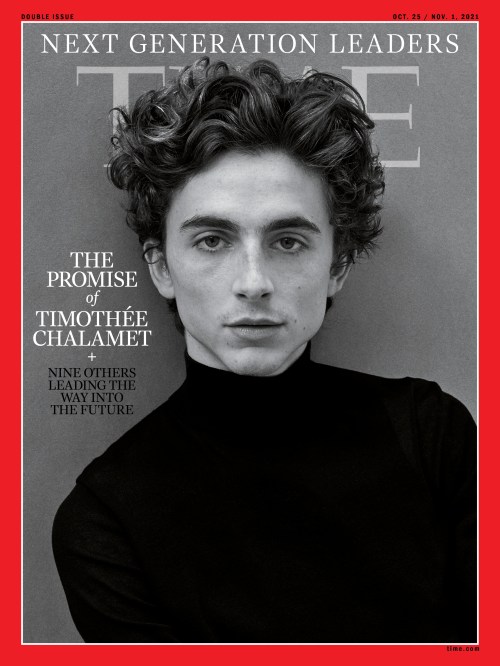
New top story from Time: Timothée Chalamet Wants You to Wear Your Heart on Your Sleeve


Timothée Chalamet and I are on the run, chasing down Sixth Avenue on a bright September day in search of a place to talk. The restaurant in Greenwich Village where we had planned to meet ended up getting swarmed by NYU students while I was waiting for him, chattering excitedly to one another—“Timothée Chalamet is here!” “Shut up!” “Yeah, he’s right outside!”—so, trying to avoid a deluge of selfie seekers, I bolt from the table, tapping Chalamet on the shoulder where he stands under the awning, on the phone, and we make our escape. Face covered with a mask and hoodie pulled up over his curly hair, he’s mostly incognito but still cuts a distinct enough figure that we’d better find a new location fast, and standing at a crosswalk with him, I feel briefly protective, like I should be prepared to body-block an onslaught of fans at any moment.

<strong>“I feel like I’m here to show that to wear your heart on your sleeve is O.K.”</strong>[time-brightcove not-tgx=”true”]

Luckily, we go undetected as we make our way to another diner a few blocks down—a true New York greasy spoon, less crowded and doggedly uncool—and slide into a back booth. He orders black coffee and matzo-ball soup, which he says he has been craving. It’s not an easy thing to come by in London, where he’s been in rehearsals for Wonka, an original movie musical that will serve as a prequel of sorts to Charlie and the Chocolate Factory, following the titular chocolatier as a young man. He just spent a weekend recording music for the film at Abbey Road. “I felt out of my league,” he says of working in that legendary space. “Like I was desecrating history!” But working on this project has been good for him. “It’s not mining the darker emotions in life,” he says. “It’s a celebration of being off-center and of being O.K. with the weirder parts of you that don’t quite fit in.”

Timothee Chalamet Time Magazine Cover
Photograph by Ruven Afanador for TIME

If Chalamet—whom most people call, affectionately, Timmy—sees himself as off-center, so far it’s working. He’s back in New York for the Met Gala, which he’s co-chairing alongside Billie Eilish, Naomi Osaka and Amanda Gorman. (He walked the red carpet in a Haider Ackermann satin tuxedo jacket and sweatpants.) On Oct. 22, he’ll appear in two films released on the same day. There’s Wes Anderson’s ensemble The French Dispatch, which earned raves out of Cannes, in which Chalamet appears opposite Frances McDormand as a revolutionary spearheading a student liberation movement. He also stars as royal Paul Atreides in Denis Villeneuve’s towering sci-fi epic Dune, an adaptation of Frank Herbert’s beloved 1965 novel, budgeted at a reported $165 million and slated for a massive worldwide release.

This makes it a big moment for Chalamet, who is not just an actor who works often, although he does, and not just a celebrity, although he is one, but a movie star in the old-fashioned sense of the word. (More on this later.) He’s now the rare performer who, at 25, studios are betting can help launch a blockbuster franchise and a festival hit on the same day, with a pandemic still rumbling out of view. With great power, of course, comes great responsibility—including a spotlight on everything from his personal life (he’s been linked to actor Lily-Rose Depp) to his activism (he’s outspoken on climate change) to what he wears, whether on a red carpet or dashing to the bodega. The latter runs the gamut from embroidered joggers to tie-dye overalls to space-age suiting—or, say, a Louis Vuitton hoodie spangled with 3,000 Swarovski crystals. (All this has led GQ to crown him one of the best-dressed men in the world.)

Chalamet belongs to a generation that’s known for oversharing, particularly on social media, but his Instagram is frequently enigmatic; he holds more back than many of his contemporaries. He cites as role models Michael B. Jordan, Leonardo DiCaprio and Jennifer Lawrence—the latter two of whom he’ll appear opposite in Adam McKay’s star-studded Don’t Look Up on Netflix in December—actors who are more likely to talk about craft than to post selfies doing sponsored content. If fame is surreal to him, he also doesn’t make a show of resisting it. “I’m figuring it out,” Chalamet says. “On my worst days, I feel a tension in figuring it out. But on my best days, I feel like I’m growing right on time.”

As we sit and talk, a procession of fans stop by the table to ask for photos—mostly young women, but there’s one sheepish-looking guy, too, who looks to be in his 40s. Chalamet indulges them all gamely, making conversation. “Oh, you go to Columbia?” he says to one girl. “That’s cool! I did too.” He stops himself. “Well, I dropped out.”

If the challenge is staying level amid all this attention, he has a game plan. “One of my heroes—I can’t say who or he’d kick my ass—he put his arm around me the first night we met and gave me some advice,” he says. What was it, I ask?

“No hard drugs,” Chalamet says, “and no superhero movies.”


Chalamet grew up in midtown Manhattan, where his mom was a Broadway performer and his father worked as an editor for UNICEF. He went to the arts high school La Guardia, where he performed onstage. Not long after graduating, he booked a role as Matthew McConaughey’s son in Christopher Nolan’s 2014 space drama Interstellar, which he, along with everyone he knew, expected would catalyze his career. “I remember seeing it and weeping,” he says, “60% because I was so moved by it, and 40% because I’d thought I was in the movie so much more than I am.”

He briefly attended Columbia, then NYU, but didn’t finish college, which he says seems “insane in retrospect.” He remembers the insecurity of those years, which he describes as “the soul-crushing anxiety of feeling like I had a lot to give without any platform.” But he waited for the kinds of jobs he wanted, trying to avoid getting locked into a commitment that might stifle his growth, like a years-long TV contract. “Not that those opportunities were coming at me plenty,” he says, “because they weren’t. But I had a marathon mentality, which is hard when everything is instant gratification.”

That paid off in 2017 with the release of Luca Guadagnino’s gay love story Call Me by Your Name, which earned him an Oscar nomination and catapulted him to fame. (He demurs when asked about co-star Armie Hammer, who has denied a widely publicized accusation of rape. “I totally get why you’re asking that,” he says, “but it’s a question worthy of a larger conversation, and I don’t want to give you a partial response.”) That same year, he featured in Greta Gerwig’s Oscar-nominated Lady Bird. He followed up with the addiction drama Beautiful Boy, then Gerwig’s adaptation of Little Women, both of which earned him still more critical praise.

If his filmography has made him an art-house darling, Dune feels like the perfect big movie for an actor like Chalamet: despite the booming score and dazzling visual effects, there’s a gravity to it—and an unusual prescience. “Dune was written 60 years ago, but its themes hold up today,” Chalamet says. “A warning against the exploitation of the environment, a warning against colonialism, a warning against technology.”

Dune is also the kind of cinematic event that demands to be seen in theaters, which spelled controversy when Warner Bros. announced that, due to the pandemic, all of their 2021 films would premiere on the streaming service HBO Max concurrent with their theatrical release dates. Chalamet shrugs about it. “It’s so above my pay grade,” he says. “Maybe I’m naive, but I trust the powers that be. I’m just grateful it’s coming out at all.”


A day later, we meet at a bar in Tribeca. As he arrives, he’s wrapping up a call. “Love you too, Grandma,” he says gently into the phone as he’s hanging up.

Male movie stars have long been defined by an old model of masculinity. Chalamet, who rose to fame playing a queer character and whose style is frequently described as androgynous, evinces a kind of masculinity that’s a little different: more sensitive, more emotional, in keeping with his generation’s permissive attitudes about self-expression. “Timothée is a thoughtful, poetic spirit,” says Villeneuve. “I am always impressed by his beautiful vulnerability.” Chalamet doesn’t always reveal much, but what he does is intentional. Ask him what he stands for, and he considers it seriously. “I feel like I’m here to show that to wear your heart on your sleeve is O.K.,” he says.

Yet Chalamet knows better than to obsess about how he’s perceived by the public. “To keep the ball rolling creatively takes a certain ignorance to the way you’re consumed,” he says. He calls it a “mirror vacuum”: the black hole you disappear into studying your own reflection. He wants to use his platform thoughtfully, to spread the right kinds of messages through the world—whether that’s about mental-health awareness, a subject which he wants to see become “less of an Instagram slide share and something more intrinsic,” or climate. “I don’t think it’s a coincidence that the same generation that inherits the overheated planet is the generation saying, ‘Hey, there’s a level of complacency here,’” he says.

All that said, Chalamet doesn’t take himself too seriously. The idea that he’s seen as a movie star—let alone his generation’s most promising—seems to make him squirrelly. “I don’t want to say some vapid, self-effacing thing,” he says. “It’s a combination of luck and getting good advice early in my career not to pigeonhole myself.” The term movie star, to him, is “like death.” All it does is make him think about ’90s-nostalgia Instagram feeds.

“You’re just an actor,” Chalamet says, like a mantra. “You’re just an actor!” Then he looks to me, as if checking to see if he’s convinced me it’s true.

Cover styled by Erin Walsh; grooming by Jamie Taylor

Share:

Blog Archive

Subscribe Here

Blog Archive

Recent Posts

Unordered List

Definition List

Pages

Theme Support